Resident
Technology Talk
by Kate Boyes MRICS (Originally given at the ARMA Northern Chapter in January 2019, updated for this article February 2022)
I’m Kate Boyes
Eight years ago I founded Resident – property software developed bespokely for the block management industry.
I am a Chartered Surveyor, I have a 1st class degree in land management from the University of Reading and have sat on the board of ARLA.
I worked for a commercial landlord & tenant firm in the west end before establishing my own lettings business in the South East, and then my own block management business. Suffice to say my background is 100% property and not technology.
Resident was born from a genuine frustration with archaic and inflexible solutions to the challenges I faced everyday.
Looking back...
Go back to 2012 / 2013 – I looked after a niche estate. It was just under 100 units so not huge but certainly not small. It had about 15 service charge schedules and some distinguished features:
- It was a heritage building mixed with new builds,
- It had been signed off wrongly by the local council,
- It needed £100k of fire upgrades; the grounds were supposed to open to the public once a year, parts of the grounds included a listed arboretum and a rockery – as you do!
- AND to top it off the new builds had multi million pound NHBC claims.
Where do you start with communicating this with the residents?!
Where do you start with that level of financial reporting?!
The workload
I would prepare bespoke financial reports for the directors once a month. I asked the software package I used at the time to build a template for me. They couldn’t. I was a property manager, not fluent in code, and I simply didn’t understand the complexities of prepayments and accruals. The software I used just didn’t understand the plight of a property management department and I didn’t understand the software I used either!
I needed to email updates to the client daily. But I didn’t need or want to see the round robin debates from the leaseholders.
I needed answers to decisions but I didn’t need to know that they would let me know their decision after their lunch, where they were eating, what they were eating and who with!
I am being flippant but you know exactly what I mean.
Resident
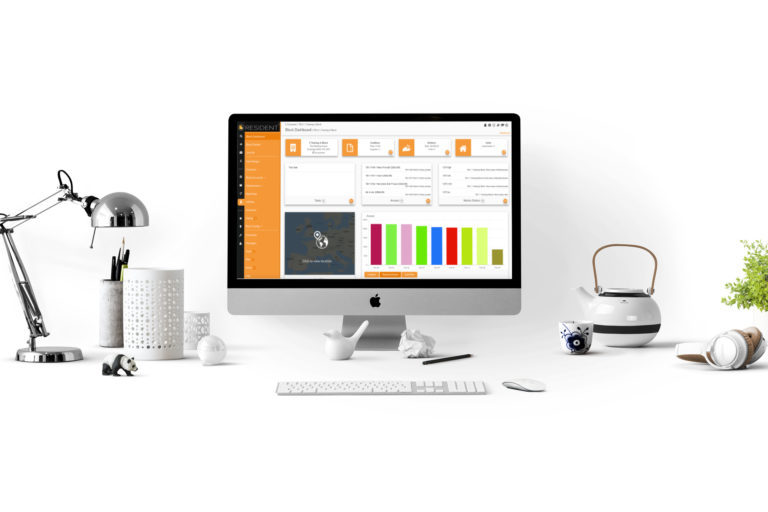
So to cut a long story short I took my 84 point checklist of things property managers need to do with each block; yes, my 84 point checklist.
I worked out that my accountant was handling company secretary stuff over here, my spreadsheet was handling reminders over there, my software was generating service charge demands and payments but I didn’t really understand the software and the clients didn’t begin to understand the system standard generated reports.
I had a a server in the office storing documents over here, a million emails over there, and would spend hours printing and posting service charge demands. So I set about building ONE platform for everything – the first version of Resident was born in 2015.
Technology
What i have learnt about how it can assist property managers?
#1
IT and technology companies should not shroud simplicity with complexity as a way of increasing their charges – this happens a lot.
#2
There are ’cloud based systems’ that aren’t true cloud systems. These still rely on networks and therefore overheads in IT costs
Agents need to start by looking at their internal infrastructure:
#1
Servers, networks, email hosting, telephone hosting – there are such simple solutions that cost absolutely nothing and offer flexible agile working compared to the IT contracts and leases I was tied into and I still see so many tied into.
#2
Expectations are moving so fast – a year ago clients queried our cloud based product as wanted security of their in-house servers; now clients want to get Resident working as perfectly as possible as quickly as possible because they too want to reduce their overheads – office space, travel, flexi working etc.
BUT technology is not about creating solutions for problems that don’t really exist.
In your day to day role:
- What can be automated?
- What is a waste of a persons time?
- What are the jobs that feel so tedious because you feel like you are wasting your time doing them, but need to be done?
- What do clients want?
Thats where technology steps in.
Clients
Clients want you. They want to see you, to talk to you, to discuss. To debate. To listen. To hear. To see that you care and that you are present.
A computer will never, in my opinion, replace this.
And to be honest do we really want it to? I don’t think any of us entered the property industry because we wanted to sit behind a desk. In fact isn’t that the answer all of us gave to our first job interview in this industry? Why do you want to work in property?
Clients want transparency on the information they can access:
- how much is in the bank?
- who hasn’t paid their service charges?
- was this supplier paid?
- was this invoice posted on the correct schedule?
The client doesn’t care that it took you 40 hours this week to post this on the system. They just want to see the results. And what’s the point in a system that they can log in to see if the information they see is a month out of date? They will still call you; you will still spend time looking it up.
The strategy
There is a perhaps well known insight on LinkedIn from a JP Morgan director on customer focused strategy:
- NETFLIX did not kill Blockbuster, ridiculous late fees did.
- UBER did not kill the taxi business, limited taxi access and fare control did.
- APPLE did not kill the music industry, being forced to buy full-length albums did.
- AMAZON did not kill other retailers, bad customer service did.
- AIRBNB isn’t killing the hotel industry, limited availability and pricing options are.
And I suppose this is the point I am getting to:
Technology by itself is not the real disruptor. Not being customer-centric is the biggest threat to any business.
So what do I foresee as some cracking technologies that will assist you in the years to come?
Fintech
Companies such as GoCardless & Stripe
For example, a leaseholder receives their service charge demand which has a simple web link or button to click. They click and a pre-formatted form pops up whereby they enter their bank details and you have already set it behind the scenes to take a one off lump sum, or monthly payments and hey presto. This information is reported back to your software. Job done.
Open Banking
This is the secure way to give providers access to your financial information.
Directly feeds bank transactions from individual bank accounts not an easy task
It will enable financial controllers / book-keepers to provide live bank account information to their clients. The better the quality of the information the happier agents will be in offering this transparency. It will also enable them to spend the time to sit and discuss the financial results with the clients; rather than spending time data inputting which should be automated by tech.
Estimated to save around 80% of book-keeping time, and will also evolve into flexible online payments and receipts direct from the banks no doubt replacing direct debits and standing orders.


OCR technology
Enabling suppliers invoices to be scanned in bulk, the details read by the system, and auto loaded into the system with a copy of the invoice attached – statistics on the time saving is hard to predict but it’s huge and i anticipate one to three days per week for the average book-keeper in this industry.
Data Webhooks / APIs
The ability for all changes within the system to be sent to a financial spreadsheet that directors can access at any time and can even be templated for specific clients if needed. It doesn’t even need to be financial this could relate to works orders and tasks.
Technology by itself is not the real disruptor. Not being customer-centric is the biggest threat to any business.
Marketing
AdminTech
Thinking about directors meetings & AGMs. Not only the time taken holding the meeting but typing up the minutes and action points afterwards. Digital devices that enable pen-to-paper note-taking and conversion to text – such as the Remarkable products are already providing time saving solutions to these challenges.
Other
- Inspection apps & works orders – automated and repopulated
- Risk Assessments
- End of Year Packs (automated)
- Pre Sales Packs (automated)
- Insurance renewals (automated)
- Smart meters – taking longer than anticipated to roll out. However the ability to report these back to your software and supplier lifts yet more un-necessary work. Let someone else deal with the renewals, unit prices, contracts by using a utility management company.
- Live chat – for me this has worked really well for utility accounts where I don’t want to pick up a phone and the associated wait time, and cannot remember my log in details or never wanted to register in the first place. I think there is a lot of consideration to be given to this as a resource for managing agents.
- Artificial intelligence – I will be honest, I still don’t really understand this especially in our marketplace. BUT from what I do understand there is a market for using a knowledge base for the computer to answer questions such as where is the water meter; when are the bins collected?
But with a change of agent, will all this information be lost as who owns this knowledge base?
This brings me to my final point:
It’s all about data
Technically the clients file is officially their file. If they request it; it is theirs.
So the data you are administering online as managing agents is your clients data.
Don’t we therefore have a responsibility to make sure it is stored in a standardised way? Flights, insurance and accommodation all have standardised data sharing. But not property. And yet we are in charge of individuals greatest assets. It’s quite bizarre if you think about.
I can log into Clear Score and see my credit history for the past 6 years and what credit card payments I made to whom and when. Why in theory can I not do this with my service charge?
And why as an agent is it so hard to access historical information when a block has quite naturally been managed by multiple agents over the years with maybe a smidgeon of self management in between.
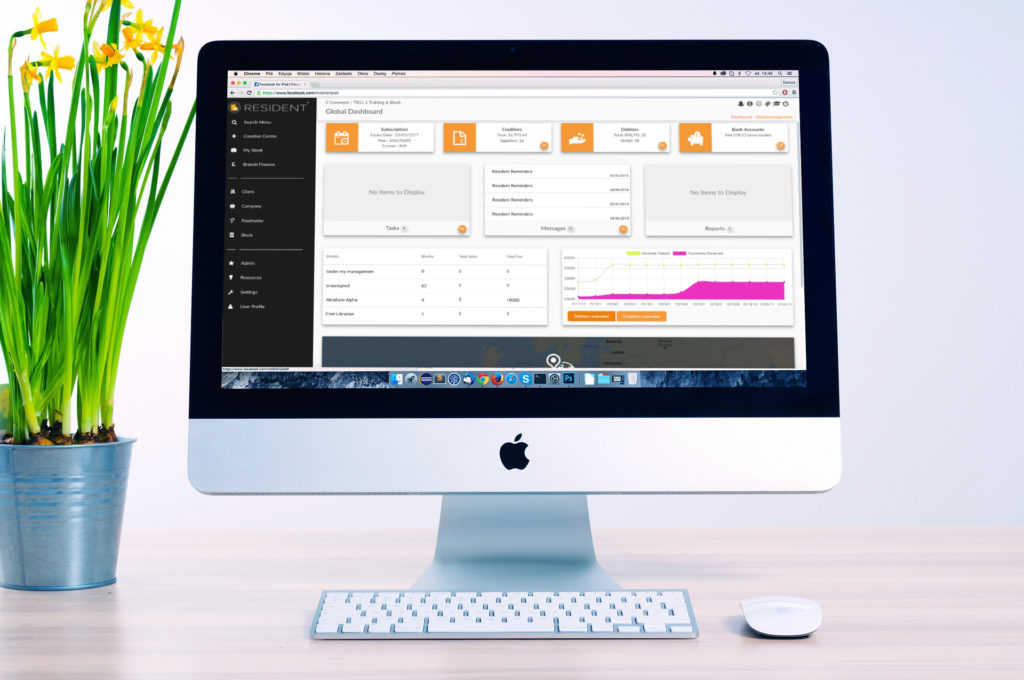
The bigger agents have departments just for exiting clients. That’s mad. The clients should have instant access to their data. But for this there needs to be Data Standards. Softwares need to adhere to a set of Data Standards written by our professional bodies in practice statements and guidance notes. Unfortunately this still seems a long way off. I am proud to say that since making this talk in 2019 Resident has been successfully offering Open Banking to its Clients and in February 2022 (this month) we are launching our own OCR technology called the Data Hub for processing supplier invoices – read more on this new software here – https://dhub.uk.com/
Resident is proudly powered by WordPress