Author: ResiDev

  • Let’s talk Integrated Email

    Let’s talk Integrated Email

    Hi again, it’s Craig, Resident’s Client Success Manager

    As you know, when you currently send any emails from Resident (other than our Ticketing module), they are sent via a noreply@resident email address.


    In the background we have been working hard to offer a way of integrating a Clients own domain email address into Resident, this meaning that:


    • You will be able to have your own company email address visible

    • You will be able to send and receive emails from this email address in Resident

    • You will be able to see replies in a Global Inbox on your Resident dashboard

    • All Agents will be able to see the inbox and be able to reply


    Better yet, we’re not stopping there. We are continuing to develop and test even more features; such as: whitelisting, custom signatures and ‘grouping’ by recipient (seeing all messages sent to that person on their ‘profile’).


    If you would like to add this feature to your dashboard, then you’ll be pleased to know that instead of increasing your subscription value – all it takes is a one off set up cost of £250 + VAT. 


    If this is something you wish to add to the service you offer your clients, it’s as easy as 1,2,3:


    1. Email me at craig@resident.uk.com with the one email address you would like to sync, such as info@ etc

    2. I shall reply with an invoice for the above costs

    3. Once paid we shall schedule your set-up process and notify you once completed with any supplementary information


    Early indications are that we will have to offer longer turnaround times as we see more Clients ‘Opt In’. Therefore, if this is something you wish to do – let me know as soon as you can!


    I look forward to hearing back from you as soon as you are able!

  • Client Testimonial – Gordon Estates

    Client Testimonial – Gordon Estates


    Hi again, it’s Craig, Resident’s Client Success Manager 👋🏼

    We are delighted to share some insights with one of our Clients who have been using Resident for the last 8 years and have achieved some phenomenal growth.

    Now managing in excess of 5000 units, here is a little bit about them…

    Gordon Estates – Northern Ireland

    Gordon Estates has flourished as Northern Ireland’s top open space and block management agency, excelling in the management of residential estates and communal spaces. With a growing portfolio, Managing Director Christopher Gordon attributes their success to their relentless focus on monitoring and improving their clients’ experiences.

    It’s the most effective way to ensure we always deliver exceptional service. Our processes must be transparent and the team must be accessible. It’s key to professional property management

    Gordon Estates was looking for a block management software solution that was built as much for owners and developers as it was for property managers.

    We didn’t just want an online admin system for our staff. We realised that the right property management software would give us the opportunity to further engage and communicate with our clients wherever we or our clients are

    With an intuitive and user-friendly interface, Resident’s cloud-based software can be accessed from any device.  So whether via laptop, tablet or mobile phone the Gordon team can easily share important information and documentation with their clients. 

    As block managers we’re responsible for maintaining and enhancing the fabric, amenities and services of all the 64 developments that we have been appointed on. With Resident we can set reminders for any works or safety checks, provide clarity on budgets and estimated costs and communicate project timescales. When we were looking at different software options it was clear to me that Resident was built for the most important end user, the resident. That level of transparency is key for us

    Resident is fully scalable and as Gordon Estates continues to expand our cutting-edge software will support their operations and help them to deliver their committed, client focused block management services.

    If you are interested in learning more about joining Resident, reach out to us today – hello@resident.uk.com. Or, if you are an existing Client of ours and want to learn more about additional ways to maximise your growth – we’d love to hear from you too and share some exciting modules!

    Thanks for stopping by! 😊

  • Say hello to Automated Supplier Invoice processing

    Say hello to Automated Supplier Invoice processing

    Hi, I’m Craig the Client Success Manager and I wanted to write a blog on my favourite Resident topic… Dhub!

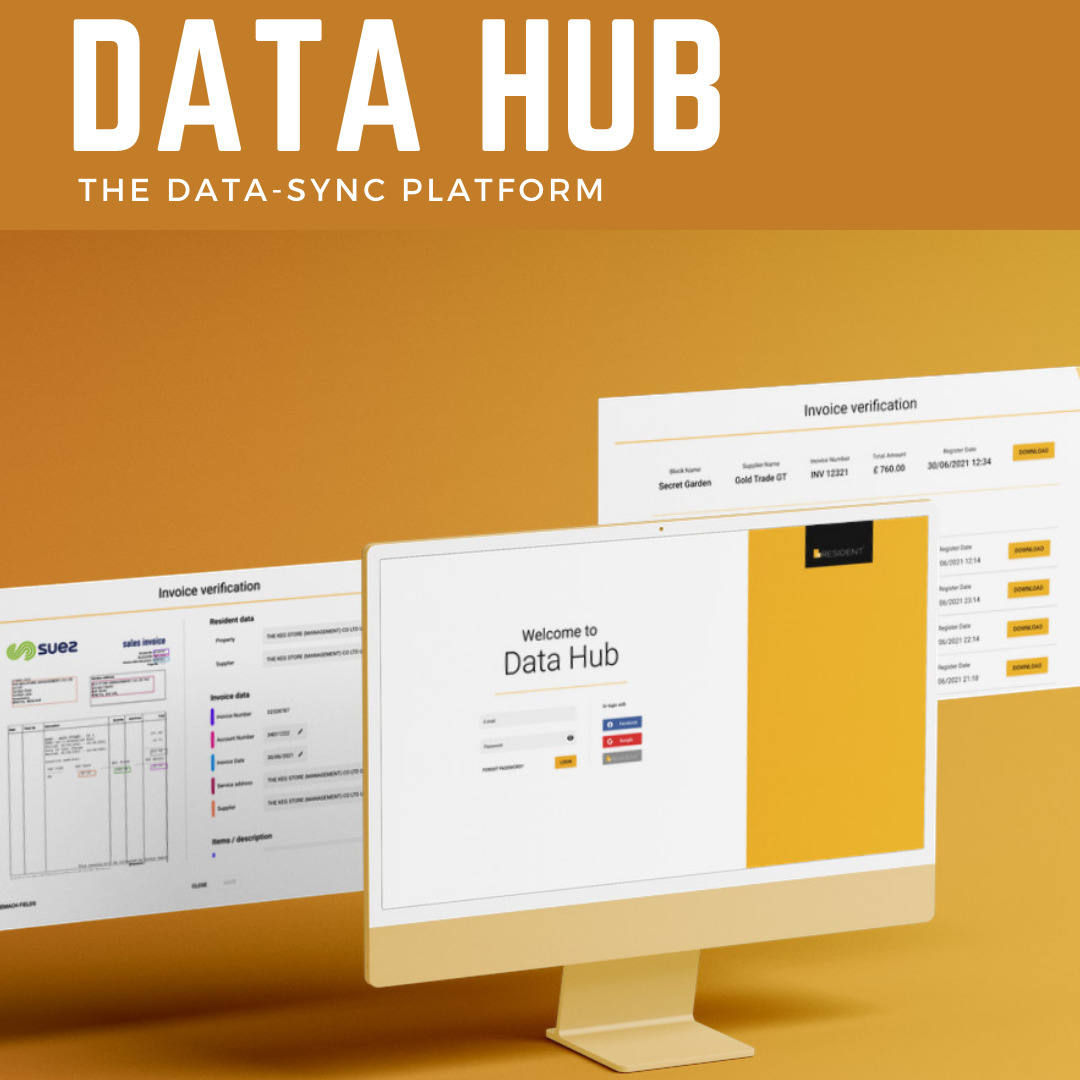
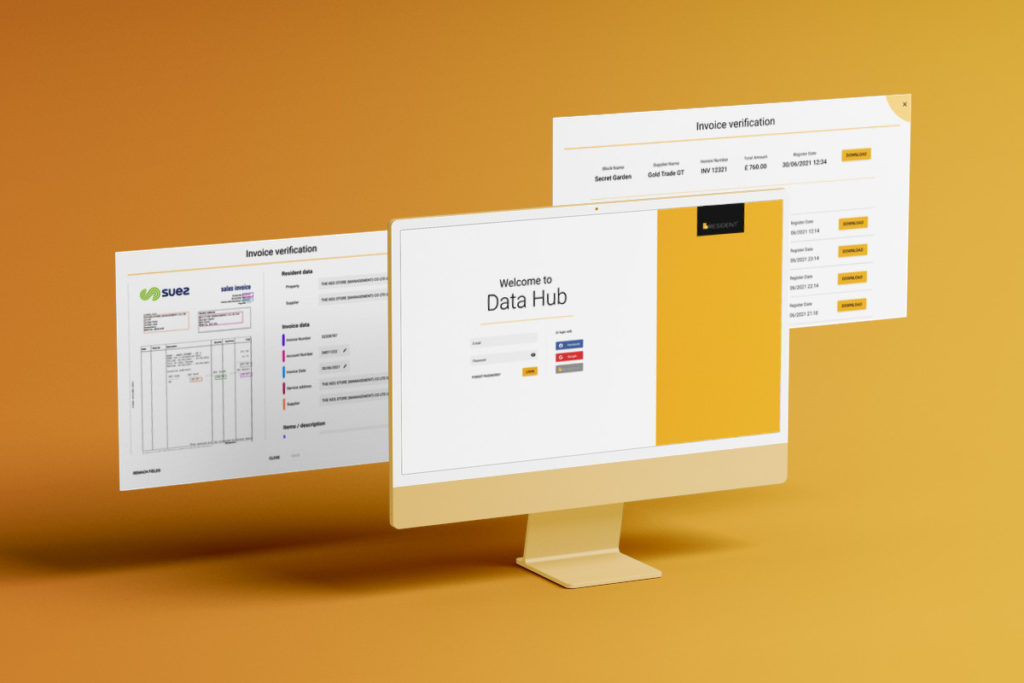
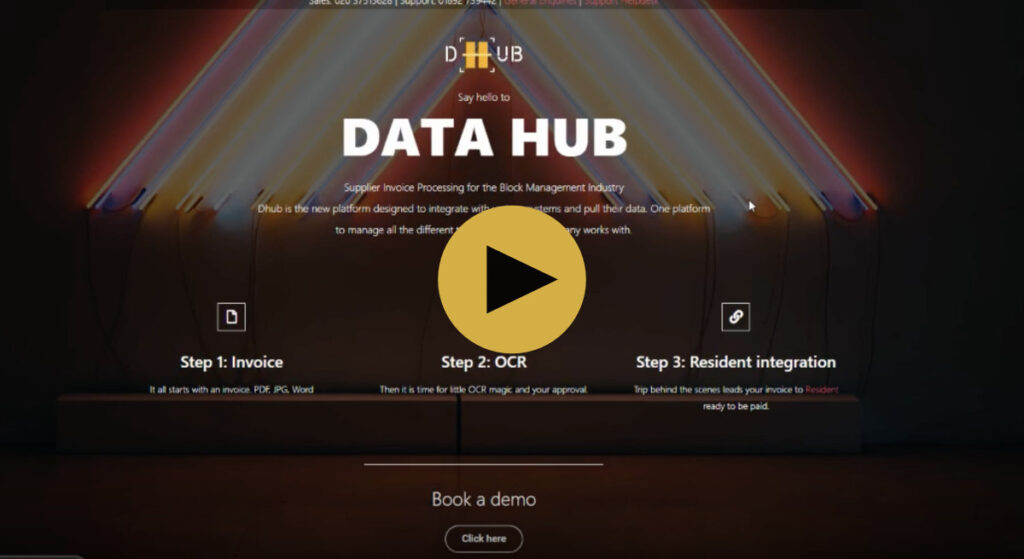
    Welcome to the new (faster) world of  processing your Supplier Invoices. Dhub is the new platform designed to integrate with Resident (and soon to be more) and pull their data. One platform to Verify and Approve your invoices in a flash!

    What is Dhub?

    Dhub essentially is a system that you can upload invoices to or synchronise with your dedicated invoices email address and it will automatically read your invoices using Optical Character Recognition (OCR) technology. 

    As soon as it has an invoice in the system and it’s been through OCR it then enters all of the invoice information into the relevant places; such as supplier name, block name, invoice number, item description, monetary values etc… and so much more! Once this has been done (we’re only up to about 10 seconds of time so far), all you do is Verify the information and Approve or Reject it. If approved, it feeds back to Resident where it is ready to be paid in the usual way.

    So what happens if you don’t just get perfectly attached PDF invoices to process? 

    I’m sure we can all think of a good number of occasions where we don’t get a lovely PDF invoice attached to an email, so how do those get onto the system?

    • Scan postal Invoices and send them to your dedicated synchronised email address – then they will pull into the Dhub, ready to be verified.

    • Take a photo of an invoice from your phone, send it to the emailit will arrive on the system and Dhub will read it!

    • If you have a supplier that posts you a handwritten invoice/compliment slip through the door you guessed it, it can read handwriting too!

    • No invoice attached, just an email asking to be paid? Yes,, Dhub will read that too – if there is an email signature with a logo, an amount of money or a block mentioned – it will pull any information it can work with.

    How much time can this save us?

    0 %
    Invoice Processing

    Estimated to save 2 to 3 days of the working week for the average service charge book-keeper.

    0 %
    Data Entry

    Built-in OCR is estimated to save 75% of time usually spent on manual data entry

    0 %
    Supplier Management

    Managing supplier invoices estimated to be twice as fast with DHub

    More than just a time save…

    So, we have established that Dhub will save you and your company loads of time manually entering data, but it can actually ‘save you’ in other ways too:

    • Protect your company from making a duplicate Supplier Payment by being ‘flagged’ by Dhub whenever you are handling an invoice the system has previously approved.

    • Dhub allows you to invite as many or as few colleagues to use the system for no additional cost. Unlimited users!

    • Increase efficiencies within your team, by working smarter through and preventing time being gobbled up by mundane data entry.

    • Dhub costs less than recruiting a member of staff to manage keeping on top of the manual way of working. A lot less!


    Yes, I mentioned cost – so let’s dig in to it:

    Much like Resident itself, Dhub works on a subscription basis.

    £177.95 + VAT per month, charged annually.


    Once the subscription is taken care of, the only other cost you will come across is the purchasing of ‘Pages’. Dhub uses OCR to read ‘pages’ of invoices. £55+VAT will get you 1000 Pages.

    There is a progression bar on your dashboard that will help highlight if you’re in need of topping up with more. Every business is different, some scan more invoices than others, so we are guided by you on this ‘Pay as you go’ model.

    If you are interested in learning more or having a demo, please reach out to me directly:

  • Annual Leave Handover: do you have one?

    Annual Leave Handover: do you have one?

    Hi again, it’s Craig, Resident’s Client Success Manager 👋🏼

    I am back to talk to you about a new possible way to utilise the functions already on Resident, to improve the quality of handovers between colleagues, at your workplace.

    Let’s face it, we’ve all been on the receiving end of ‘the worst handover of all time’.
    Your colleague skips out the door, with all the reassurance in the world that ‘everything is in the notes’ and ‘I doubt anything will happen, but if it does, it’s all there for you – in the notes’.

    It’s never in the notes. Well, at least not always to the extent that will ‘save your bacon’, there and then.

    So what are we covering today?

    Trying to get to a world where we don’t wholesomely have to ‘live in the notes’ of a handover, we are going to be exploring the ways in which we can use the tasks, assessments and insurance areas of Resident to keep us on track. When we’re either at our desks or at the pool bar.

    We shall firstly take the Point Of View of the person who is ordinarily assigned to the block and is soon to be heading off on Annual Leave. They shall be Green topics, and those in Amber are for those ‘looking after the block’ in their absence.

    Assessments:

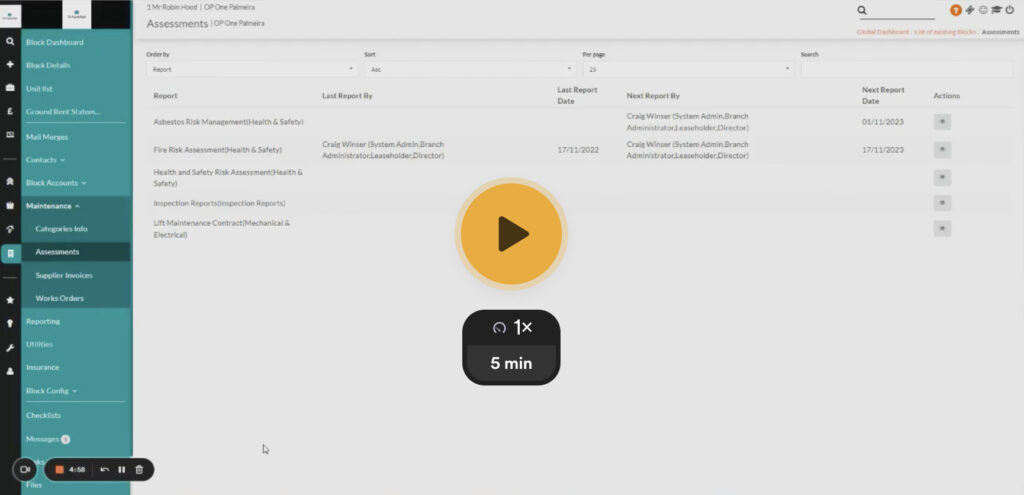
    This area is a place dedicated to your Cyclical Tasks. They could be anything from Fire Risk Assessments, right the way through to a Lift Maintenance Contract.

    In principle, these are your ‘non-negotiables’, that without question have to be completed/renewed/etc on time, everytime – no question!

    If you are not using this area on your Resident dashboard – you are really missing out from having an easier and less anxious time at work.

    If you ever have an audit, this is an area that will ensure you can quickly and confidently showcase that you are compliant.

    Now, if this is new to you or you want to be sure you are using these to the best of your ability – then please feel free to check out the video below. I talk in depth about how you can set the tasks to appear year after year, attach files, set reminders and more!


    Insurance:

    A lot like with Assessments, Insurance is an area that if you are not currently utilising on Resident, then this is definitely something to implement this year.

    Be it your Public Liability Insurance all the way through to Cladding Insurance – there are so many to keep track of, that we believe its paramount that this is all stored, actioned and reported all in one place.

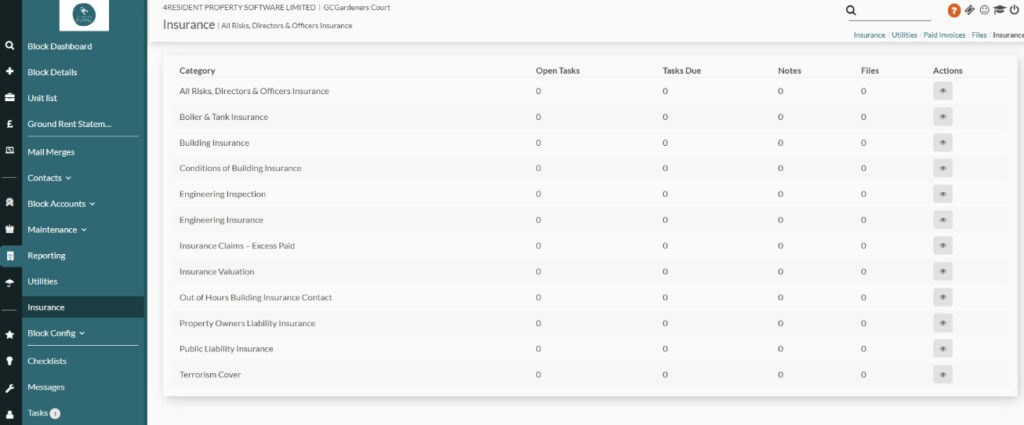
    The Insurance area on Resident allows you to store all previous years Files; such as certificates and policies, set tasks, reminders and even keep track of associated invoices!

    Whilst the setting up of tasks and the adding of files holds the same principles covered in the above video, this following link covers off the remaining differences.


    Reporting:

    Now we’re all aware of Reporting in Resident to some extent, but have you ever utilised it to become the bedrock of your Annual Leave Handover?

    In my view, if you have spent the time illustrating all of your Tasks, Assessments and Insurances onto Resident (as mentioned above), you should now be rewarded by running a report and having your handover ‘to-do list’ created for you!

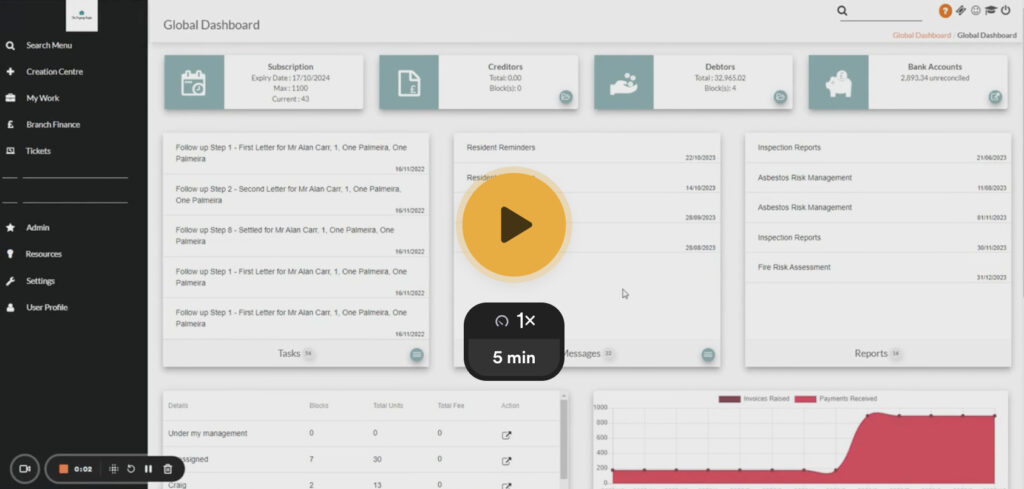
    The below video talks about this exact scenario. 

    Once you have generated and filtered the correct report, why not save it, write your colleague an email with your ‘contextual notes’ – but now simply attach your report. 

    This will consist of all of your Tasks (that span your day-to-day tasks, all of your non-negotiable Assessments and even your Insurance tasks too).


    Ad-Hoc Tasks:

    Whilst you are looking after your colleagues Block for them, don’t forget to make use of adding one-off tasks on any specific entity, for them to pick up when they are back.

    This can be by adding a Task on the Block, a Leaseholder, Director, Supplier – almost every aspect of Resident.

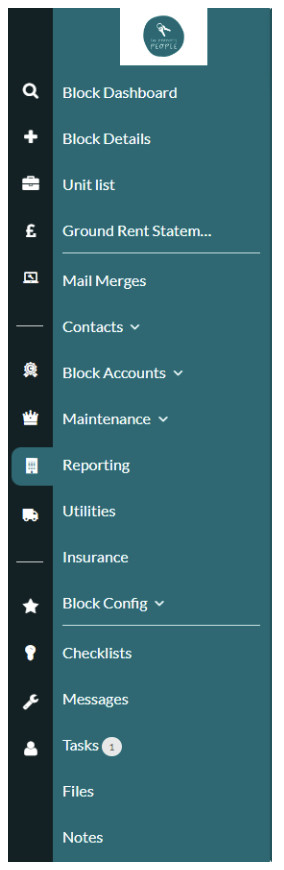
    Notice on the Menu Tasks are found in most places; as are Notes and this is a great way in assisting your colleagues for when they return to work.


    Just be sure to Assign the task to your colleague who is on Annual Leave and set it for a date when they are back – then it will appear in their MyWork Tasks when they are back!

    The videos above will already have covered everything you need to know about Tasks in general, but for anything else – see this article below, for more information.

    Thanks for stopping by and we hope this helps you & your teams! 😊
  • What’s new with Reconciliation & Sign-Off?

    What’s new with Reconciliation & Sign-Off?

    Hi again, it’s Craig, Resident’s Client Success Manager 👋🏼

    I am back to talk to you about a new complementary feature we have recently introduced to Resident.

    So, let it be said that this blog is written to all our Clients who follow RICS guidance and have individual block accounts. That bit is important to mention, if that’s you, then read on…

    For Context & Clarity

    RICS Guidance regarding Client Money Handling

    can be downloaded using this link.
    Whilst referring to “RICS Guidance” related to this topic, the above linked PDF is where we are drawing information from.

    This blog is written as dated and any up to date guidance must be sought from RICS directly!

    So what are we covering today?

    We will be discussing Reconciliation Sign-Off and Secondary Sign-Off.

    One an existing feature; the other being new to us and therefore, you!

    We shall then round up today’s blog by discussing where this information can be reported and finally, a handy video on all of today’s topics, to share with your team!

    Reconciliation Sign-Off:

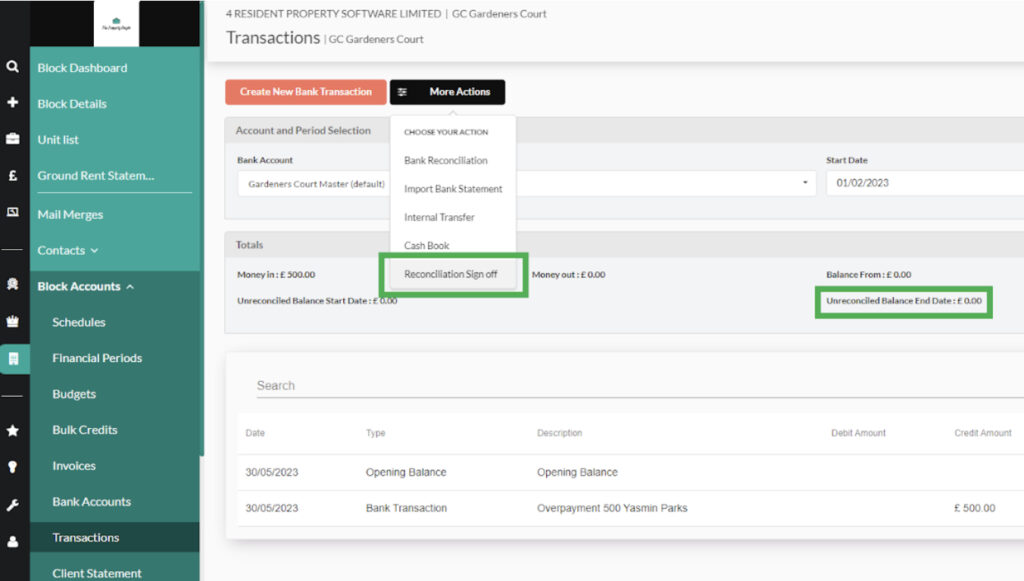
    This feature has been available within Resident since circa May 2023 and is a non-retractable step, to confirm that the unreconciled balance on the account is indeed at zero (£0.00).

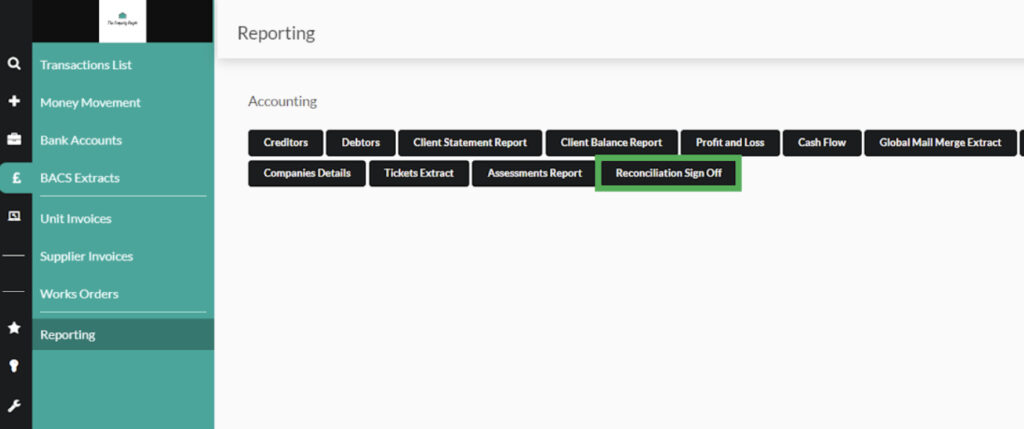
    The feature itself can be found here:

    Resident will then check that your Cash Book Balance is showing as zero on Resident, and only allow you to proceed if it is:

    Naturally, you would have your bank open on another screen at this point, to cross check.

    Please note, both this step and the secondary sign-off can be performed by anyone on Resident. It is down to your own internal process to communicate within the team ‘who’ is expected (if not anyone), to perform each of these two steps.

    Be sure to check out the video below, to see more details about how this process works!

    Secondary Sign-Off:

    So this bit is new and I am excited to share with you some more information. For a long time, Clients following RICS Guidance have had to either send an email to evidence it was indeed signed off (again), add a note in various places, print, stamp – I’ve heard and seen it all.

    Luckily, we now have the simplicity of a button and a report. Sounds much better, right?

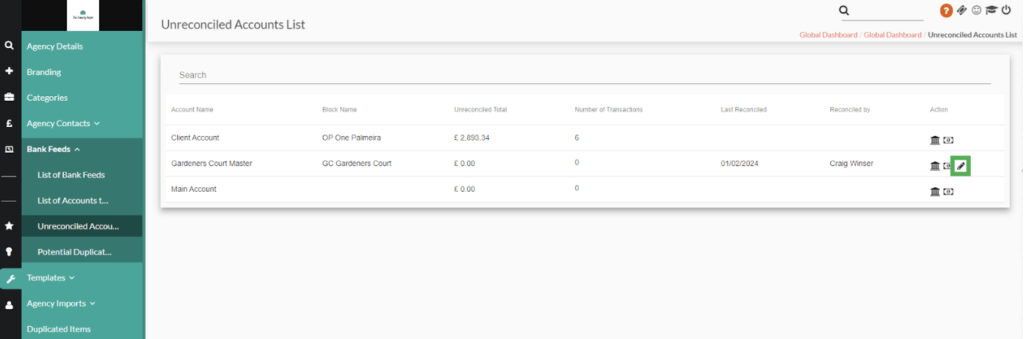
    So once the first sign-off has been completed, will you be able to kick off the second – which can be found here:

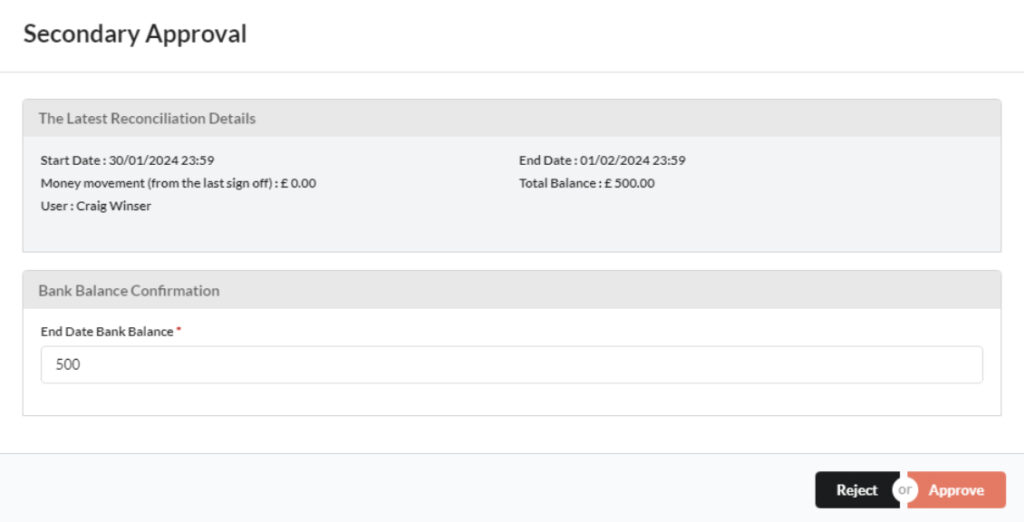
    Then, once you open up this step you will only be allowed to continue once you confirm that the bank balance matches:

    It really is that simple!

    Reporting

    Now of course, all of this work in developing this feature has been done with compliance and auditing in mind.

    You will find a full Reconciliation Sign-Off report at both Block level and Branch level.

    Both the reports are the same, but will either be a restricted-view, or not.

    Learn more & share with your teams!

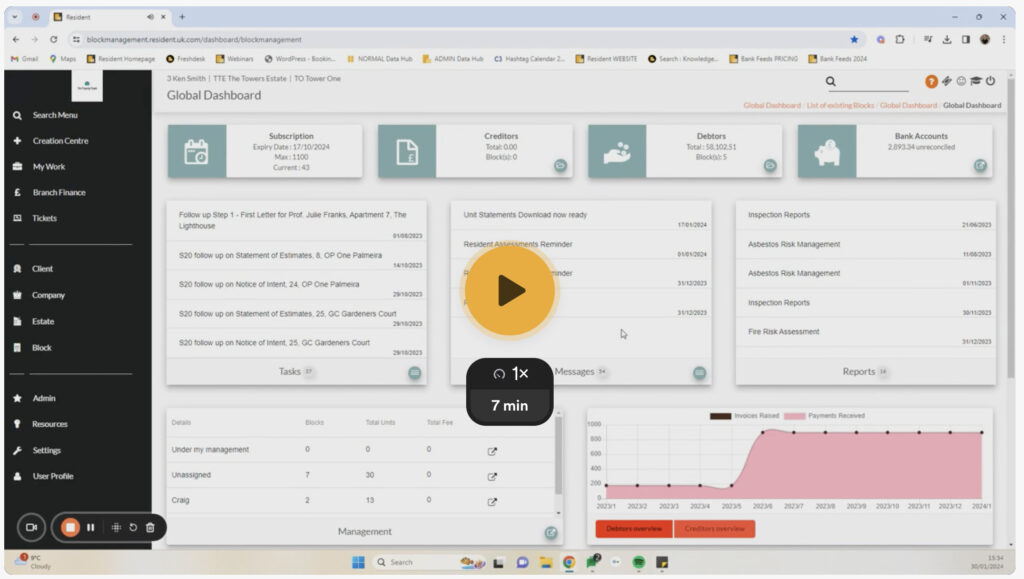
    As per usual, I have recorded you a video to provide more information and allow you to follow me along physically showing you ‘How-To’ do this yourself:


    Thanks for stopping by and we hope this helps you & your teams! 😊

  • New Year, New… us?

    New Year, New… us?

    Hi again, it’s Craig, Resident’s Client Success Manager 👋🏼

    So, it’s fast approaching that time of year when people make New Year’s resolutions, reflect on what they have achieved and what they want to see happen in the following year.

    What is a Resolution anyway?

    The drive for making resolutions is motivated by this ‘punctuation in time’. They activate hope and expectations for what we hope to achieve going forward. With a New Year comes a ‘sense of renewal’ and evolution.

    We’re almost 10 years old!

    It’s hard to believe that we are nearly 10 years old.
    Starting in 2014, next year we will be celebrating our very special 10 year anniversary.
    What better way than to do something BIG to mark the occasion… that’s right, we meant it when we said “New Year, New Us”. We’re having a little bit more than just a makeover!


    Next month we shall be releasing a special Newsletter focused solely on this topic. But we have been finding it hard to keep such a big and exciting secret… So let’s share a few of our motivations that have become ‘the pillars’ behind the next version of Resident!

    EFFICIENT

    To make our clients’ ‘day-to-day work’ more efficient

    The new version of Resident will enable users to get to different parts of the system using much fewer clicks. Most functions will be clickable from the main Dashboard and take you directly to where you want to be…say goodbye to multiple menus!

    AGILE

    Opening doors for development and implementation… with minimal impact on you

    The system will be future-proof.
    It will allow us to withstand multiple scenarios of adding new features as we and the industry evolves, without causing a negative impact on the end user.
    Thanks to next generation modularity, if a new function needs to be added due to new laws or natural evolution, then this can be entirely self-contained, meaning it will not impact other parts of the system in any way!

    TAILORED

    Resident, but more of ‘you’ at the centre of it

    We want Resident to be more tailored to the needs of our users.
    Mindful that every single Client’s workflow is different, even one employee sat next to another may work differently to one another… but there is still a way we can make lives easier and put each person at the helm!

    We will be creating a ‘Favourites Tab’ within the Dashboard itself.
    Just imagine, you’re someone that uses Resident mostly for the same 5 things each day, you will now be able to create your own ‘quick access panel’ to the parts of the system you use the most!
    More tailored, less time wasted!

    INNOVATIVE

    We like to look good too, that’s fine, right?

    Joking aside, the reason for aesthetic changes are always deeply rooted in the drive to make Resident’s UX & UI as great as we possibly can.

    In short, this means thinking about the interactions had on the software and are they necessary and as optimised as they could be?

    As an example of this, we shall be introducing ‘Dark Mode’ to decrease eye strain and also focusing on even bigger topics such as state of the art architecture, to encourage speed and less operation errors. This is all but a wisp; a flavour, if you will…

  • Client Case Study – Blocsphere

    Client Case Study – Blocsphere

    Q&A with Blocsphere

    Congratulations on your recent success at the News on the Block 2022 Awards. What does it take to win the ‘Scale Up Property Management Company of the Year’ and be a finalist in the ‘Customer Service’ category. What sets Blocsphere apart from your competition?

    Scale Up Property Management Company of the year


    • A clear vision of what you want to achieve in the long run
    • Ensuring a smooth onboarding process for new staff members
    • Making sure that there is no disruption to the clients as we grow
    • Nurturing and training staff

    Customer Service Category

    • Maintaining professionalism at all time
    • Providing as much information to residents as possible, even if it something which they may not necessarily want to hear!
    • Strengthening the relationship between residents and property managers Going the extra mile
    Your property managers walked away with the highly commended award in the ‘London Property Manager of the Year’ category and finalist in the ‘Regional Property Manager of the Year’ category. Tell us about Sophia and Chloë’s Blocsphere journey and what drives them to deliver award winning services?

    Sophia has filled the gap with the London portfolio superbly. She is attentive, friendly, approachable and hard working. She is able to relate to her clients and really provides a service above and beyond. She manages buildings with combustible cladding remediations and has really put the residents at ease with her updates and communication. Sophia is a real asset to the company and we hope to have her with us in the long term.

    Chloe took over some of the Midlands portfolio whilst the property manager for those sites was off on maternity leave. Choe is never afraid to ask for help and assistance if needed and works closely with the facilities management team to ensure that all sites are looked after. She is an effective
    communicator and very hard working.

    Ash and Joy have been Directors since Blocsphere’s start up – tell us a little about its origins, why block management, how has Blocsphere grown and where is it heading?

    Blocsphere started out of frustration felt by Joy. Joy used to be in service charge recovery and would advise other managing agents of how to be compliant etc. This however often fell on deaf ears and she would regularly hear “tales” of property managers really not caring about their managed developments. As such, Joy felt she could do a much better job that the others – so started Blocsphere Property.

    Ash and Joy have grown Blocsphere from a small lettings establishment to a thriving block management company, usually obtaining clients through word of mouth. Our real “selling point” is
    knowledge. The whole team is very knowledgeable in all areas of block management, which we feel puts our clients at ease that they are with a company who will ensure everything is being done properly.

    Blocsphere have now added on sales, lettings and facilities management to their service which is gaining in strength on a daily basis.

    Block management is a fast paced, ever evolving industry, what has made the greatest impact on the industry since Blocsphere’s start up?

    In a nutshell, Grenfell changed property management forever. The tragedy highlighted the dangers leaseholders in high rise blocks of flats face every day. We are still working through the new rules
    and regulations, however, the safety of residents is of the upmost importance.

    Many managing agents working with Resident believe the industry has become more demanding. Is this your experience? Why do you think that is?

    Very much so. Unfortunately, a managing agent is the only “person” a resident can speak to. This isn’t always a pleasant interaction and we do feel that some people have simply lost the ability to be courteous to others. It is a thankless job, but a very necessary one.

    In a recent interview Resident’s founder was asked “Some say the property manager is an engineer, lawyer, architect, economist, and a psychologist in one” Can Sophia and Chloë relate?

    Everyone in the office can relate. We are so much more than just property managers. As the
    founder of residents has correctly said, we are all of the above. Sophia and Chloe have both had
    experiences in all of the above.

    How do you see (or want to see) block management evolving in the future?

    We are already seeing an increased focus on fire safety following the Grenfell Tower fire and expect
    to see this increase over the coming years. We welcome these changes and improvements as we
    strive to make the buildings we manage as safe as possible for occupants and visitors.

    What advice do you have for the new generation of property managers?

    Have systems in place to keep everything organised as it is easy to lose track with so many different things going on. Ensure that as you are working to solve problems, you keep interested parties such
    as Leaseholders and Tenants informed at every stage.

    Quote from Sophia: It can be busy, but keep the customer (owner, contractor tenant) in mind with the best intentions to help them, always offer a resolution and keep your client updated and communicate with them where you can. It can be very busy, with no day the same, but rewarding when you see a job well done and a safe, compliant block.

    Blocksphere has been using the Resident platform for some time now, how has Resident helped you achieve growth, efficiency, and transparency, win awards?

    Resident has enabled us to automate more tasks and streamline existing processes. This creates more time for our client accounting staff and property managers to spend dealing with leaseholder
    queries. One of the main reasons we moved to Resident was because of the leaseholder & director portal. We felt that this offered a much more user-friendly environment compared to the portals of other software providers we considered. It is extremely important to us that our clients can easily find important information regarding their building.

  • Say goodbye to being drowned in maintenance issues…

    Say goodbye to being drowned in maintenance issues…

    Hi again, it’s Craig, Resident’s Client Success Manager.

    I am back to talk to you about another Module designed by Resident, to make your working lives that bit easier.

    It truly isn’t an exaggeration to say that sometimes it’s easy to think we are drowning in maintenance issues being reported. Those issues also get reported in a multitude of ways: email, phone, letter, voicemail, in person… to name but a few.

    Resident has designed the Ticketing module, to help ease the pain. A way to capture maintenance issues all in one place. You can attribute tasks, assign to colleagues, respond to the sender, create work orders and so much more.

    In this blog we are going to take a deeper dive into all things Ticketing and understand how it can make a drastic difference to you and in turn, your clients too.

    So, without further ado – let’s take a look! 

    Psst…If you are a visual learner, feel free to check out the video demonstration via the link at the bottom of this blog…

    What is Ticketing?

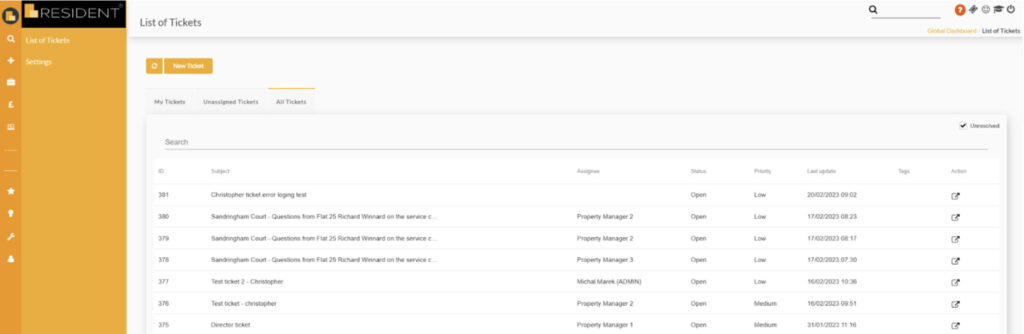
    In order to help explain, I will start off by sharing with you what the main area of Ticketing looks like:

    Think of Ticketing as the most organised list you’ve ever seen. You can see tickets assigned to you, your colleagues and those that need assigning – perfect if someone is away from the business for any period of time, and conversely – keeping a keen eye on your own workload.

    You can key word search to help find a ticket quickly, tag tickets (this could be the block name or the issue type – whatever you decide). You can also prioritise tickets too, by using the Grade feature.

    How integrated is Ticketing?

    Short answer, totally integrated!

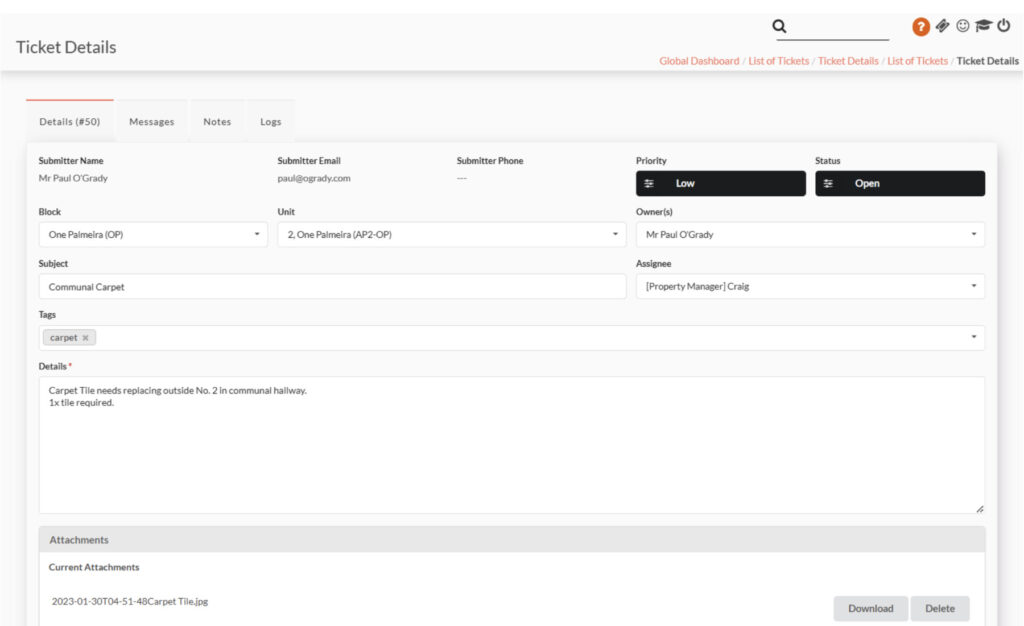
    A Leaseholder/Director can submit a ticket via email, the portal or direct from your website and they will all show up in Ticketing. If the submitting email is found within Resident, it will automatically hook their registered Block, Unit and Owner information. The system will also pull their Email address, telephone number and any files they attach to their initial ticket/email too.

    What other features does Ticketing have?
    • Assign Tickets to other colleagues
    • Send automatic notifications when a new ticket is received/assigned to you
    • Weekly Status Reports
    • Create Works Orders against a Ticket, which creates a ‘quick link’ back to the Ticket and prompts you to update the status of the Ticket
    • Create Tasks against a Ticket to never lose track
    • Two way messaging between yourself and ticket reporter (and more) – all stay logged within the ticket itself
    • Tickets raised by a particular leaseholder are also all located on their individual ‘level’, within their Ownership Details tab
    • Write internal notes that only yourself and your colleagues can see
    • Merge Tickets – Perfect if everyone in the block starts reporting the same broken lift!
    • See a an overarching Log on a Ticket, to evidence who actioned ‘what’ at any point – think of this as your Audit Trail

    The ways in which Ticketing can improve how you manage this busy aspect of Block Management are extensive and we would be delighted to talk through this with you in more detail.

    To help gain a deeper understanding of all things Ticketing, please feel free to check out the Video Demonstration by clicking the link!

    So, if you wish to learn more then please reach out to me directly: craig@resident.uk.com

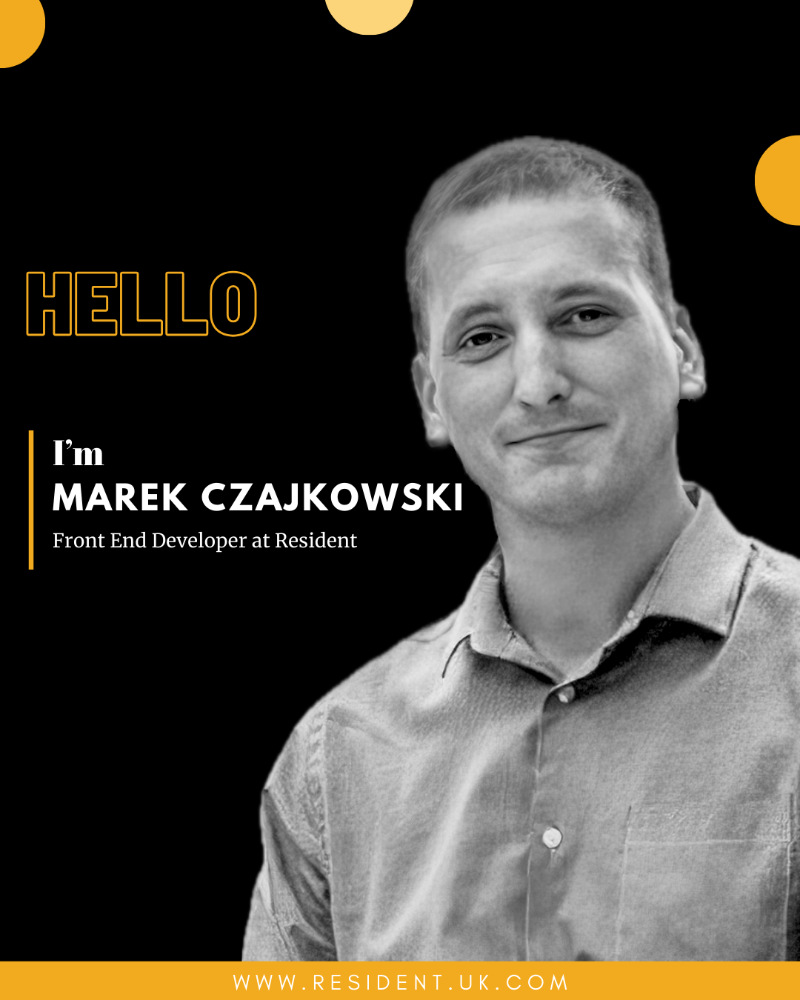
  • Employee Q&A with Marek

    Employee Q&A with Marek

    “Right from the start, we aimed to provide our users with full flexibility and the ability to work from anywhere in the world. Then, a couple of years later, ‘everything happened,’ and this idea became a reality for everyone. “

    Tell us a little about your career journey – what was life before Resident?

    I’ve got a master’s degree in journalism and public relations. Before joining Resident, I worked as a journalist at one of the mainstream Polish newspapers, ‘Gazeta Wyborcza.’ I’ve always had a passion for writing, so it was an ideal place for me to fulfil it. During my time in the media, there were a couple of interviews I conducted that will stay with me for my entire life. To recall just one of them, I had the privilege of talking to Maestro Krzysztof Penderecki, who was a Polish composer and a true legend in the world of modern classical music. He was the author of a Symphony No. 7: Seven Gates of Jerusalem, written to celebrate 3000 years of the City of Jerusalem. You can also hear some of his pieces in films like ‘The Exorcist’, ‘The Shining’ (Stanley Kubrick’s version) or ‘Twin Peaks’ to name a few. It was a very valuable conversation about music, culture, and the origin of inspiration.

    Ok, I’m getting a bit carried away by the memories… Moving forward, I was offered a job at a marketing agency, which I decided to take. This allowed me to approach my writing in a slightly less formal and more creative manner. To be honest, this was where my interest in coding began. You see, my desk was situated right next to the development team. As the months went by, I had the opportunity to witness the amazing work those guys were doing, and it felt like something really significant to me. So, I went back to university and completed a post-graduate diploma in IT.

    And then Resident came along, tell us a bit about your time with the company?

    Looking at it from a time perspective, those six years were undoubtedly the most interesting period in my entire career. Firstly, I had the opportunity to witness and contribute to the fantastic piece of software that Resident is, so I got the space to immerse myself in coding. At the same time, I could utilise some of my less obvious skills, such as sound production for podcasts, DTP for printed and digital brochures, and video editing and production for some of the marketing material we’ve created in the past. Additionally, I had the pleasure of meeting some equally unconventional people here, who became my friends.

    So, now we know a bit more about you – tell us, what exactly does a Front End Developer do?

    To put it simply, front-end developers are responsible for bringing to life the ideas and designs that serve as the building blocks of a website or application (like Resident). I’m referring to everything that our users see on their screens, which involves creating a user interface encompassing elements like forms, buttons, tables, and more, all presented on the screen and equipped in the certain operation logic. The visual content is designed by our UI/UX team, and our job is to transform those designs into functional code.

    During your career what have been your most valuable lessons you’ve learned along the way?

    In the era of automation and AI, I’ve come to understand the importance of not entirely excluding the human factor out of the equation. I believe it’s a wise practice to have real eyes overseeing some tasks that have been designed and scheduled to occur without manual intervention. It’s akin to having an insurance policy, providing us with the peace of mind that everything progresses smoothly and punctually. Machine errors can happen, just like human errors.

    You must have seen many changes in your time at Resident – which stands out the most to you and why?

    While I believe that Bank Feeds were a significant game changer, my personal favourite has to be Ticketing. Beyond its wonderful functionality, it holds importance for me because it signifies the new approach to Resident’s infrastructure. By this, I mean it embodies one key concept: ‘modularity.’ It serves as an optional functionality of the system that empowers our users to customise Resident to align with their specific needs. This aspect of modularity is something I am particularly excited about for the months ahead.

    What excites you the most about Resident’s future?

    We have something absolutely fantastic taking form in our secret, deep-down-below-the-ground-level Resident forge 🙂 I can’t divulge too much at the moment, but it’s going to be something truly monumental and simply outstanding! I guess I can share a few keywords: speed, user-friendliness, and ultra-modern design. Alright, I better stop here before I let the cat out of the bag!

    The ways in which people learn, purchase, research and interact have hugely changed since the pandemic. Do you think the demands of web User Experience (UX) have had to shift because of this too?

    Perhaps it didn’t undergo a fundamental change, but people have certainly become more aware and are utilising web interfaces (such as online shops, search engines, and browser-based software) much more extensively than ever before. This increased traffic primarily strains available resources, but it also serves as a trigger to reevaluate the UX aspect. The fundamental principles of UX, like providing the correct information with as few clicks as possible, remain constant. However, we now have newer tools at our disposal that will greatly enhance this user journey. This is why I’m genuinely excited for the months ahead. It’s going to be an incredible time for Resident users!

    Speaking of Resident, I believe our software was somewhat ahead of its time when it was created. You see, when it was first developed, it was already designed with a priority on remote access. Keep in mind that this was in the middle of the last decade, and remote working wasn’t as common back then! Right from the start, we aimed to provide our users with full flexibility and the ability to work from anywhere in the world. Then, a couple of years later, ‘everything happened,’ and this idea became a reality for everyone. We were prepared for this, and from that point forward, we’ve only grown stronger!

    It’s a common misconception that a Front End Developer solely focuses on website testing, bug fixes and writing high-quality code – what is one thing that would shock people to learn, that is regularly part of your working life?

    I’m not sure if this comes as shocking news, but many developers also have graphic design skills to some extent (that also includes Photoshop, Illustrator or similar software like Affinity suite). This skillset proves useful when discussing and designing user interfaces, as well as establishing the overall look and feel of the app. It also streamlines the process if we notice something that could benefit from adjustments while in the coding phase. This not only speeds things up but also reduces the number of video meetings we need to have 🙂

    So, penultimate question now – what is it like to work at Resident? Give us the scoop…

    Ha! It’s a fantastic adventure and an incredibly satisfying experience! We have the opportunity to accomplish some truly amazing things, both in terms of software development and outside of work. Get ready to spontaneously embark on a 100-mile cycling sportive or summit Snowdon in the dark! Oh, and of course, don’t forget to bring your laptop along! If not for coding, then at least for finding some decent memes (we LOVE memes) 🙂

    For anyone who might be considering a future in Front End Development, what advice would you give?

    Maybe I’ll start with a word of encouragement: go for it and start today, but begin from the very basics. This might seem obvious, but I believe it’s incredibly important. Don’t give up too quickly. Remember how the learning process feels – much of the time, it’s hard work, but that’s how it’s supposed to be. If you feel a bit overwhelmed, remind yourself that it’s a sign you’re on the right track, because this is how learning NEW things feels! If you haven’t started yet, then, as I mentioned earlier, begin with the fundamentals (HTML, CSS), and then focus on thoroughly understanding JavaScript. This will open the doors to more advanced areas of involvement, like front-end frameworks and an infinite number of possibilities, really. Don’t do it backwards – don’t attempt to learn something more complex first (like TypeScript or Angular) without first truly grasping JavaScript!

  • The King’s Speech… unpacked!

    The King’s Speech… unpacked!

    Hi again, it’s Craig, Resident’s Client Success Manager 👋🏼

    It’s a relatively short update from me, but if you have been following the news closely today; 7th November 2023, you’ll have seen The King’s speech. The first in parliament in 70 years.

    Now, amongst a number of topics, one of which was this:

     
    Leasehold and Freehold Bill


    My Ministers will bring forward a bill to reform the housing market by making it cheaper and easier for leaseholders to purchase their freehold and tackling the exploitation of millions of homeowners through punitive service charges.

    (For all of The King’s Speech 2023: background briefing notes, click here!)


    You’re safe with us

    If you are reading this, then you are already a user of Resident, which means we have your back.

    Part of what is covered by the Leasehold and Freehold Bill, is to achieve transparency over Leaseholders’ Service Charges, “so all leaseholders receive better transparency over the costs they are being charged by their freeholder or managing agent in a standardised comparable format and can scrutinise and better challenge them if they are unreasonable.”

    At Resident, our thoughts align and hence why we offer the fantastic Portal completely free of charge. Transparency to your Leaseholders and Directors shouldn’t have to be a financial burden for you to shoulder, nor should it be something you have to justify the cost for.

    Unlike other Block Management software providers in the marketplace, we do not charge per month with additional ‘£ per unit’ added on, in order to utilise the Portal with your Leaseholder; and even your Directors, too. 

    Your ability to be transparent and follow guidance, shouldn’t come at a cost.

    The Portal

    If you haven’t already started to use the Portal, then there really couldn’t be a better time to do so.

    Not only is this supportive of the direction of the times, but it:

    1. Will save you countless amounts of time handling enquiries for statements etc
    2. Allows your Leaseholders to self-serve their queries
    3. Promotes transparency
    4. It’s totally, unequivocally free of charge and is ready to use on your dashboard, today

    If you would like to start learning today, feel free to check out this sequence of videos, taken from the Resident Video Library. Save the second link if you haven’t already, for easy access to many ‘How-To’ style videos!


    Did you know that other Block Management Software providers are charging Clients thousands of pounds* per year just for Portal Access!

    *example of 1000 units equating to £4,200 with alternative provider
    *example of 5000 units equating to £18,600 with the same alternative provider

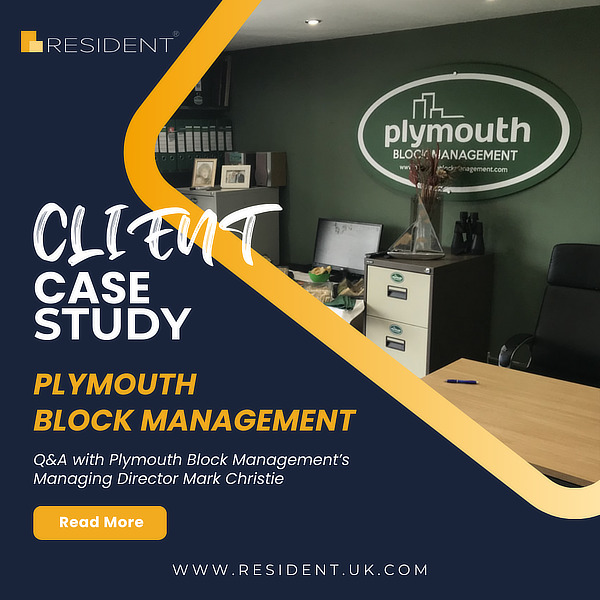
  • Client Case Study – Plymouth Block Management

    Client Case Study – Plymouth Block Management

    Q&A with Plymouth Block Management’s Managing Director Mark Christie

    Congratulations on your recent success, finalist in the ‘Regional Property Management Company Of The Year category’ at the News on the Block 2022 awards and ‘Managing Agent of the Year (1,000 – 5,000 units)’ winners at the ARMA ACE 2022 awards. Let’s go back to the start, when and why did you decide to turn into block management?

    Owned a large lettings agent in Plymouth call Property Links which I sold to Miller country wide, 2015 as I had been diagnosed with bladder cancer. The company had eight blocks under management which the new company did not want as part of the sale. So the two staff I had stayed on to manage these until I luckily recovered from the cancer.

    Tell us a little about PBM’s journey – its origins, expansion and where its heading

    The first year was a slow build up learning the business, albeit all involved had property experience, staff grow to three and the blocks grew to be fifteen in 2016, we had a small office in a business park which was one room.

    This is when we started building the web page side of the business and advertising with the help of social media.

    It was decided that the staff should get fully trained in the business, so we joined the governing body ARMA, which ensured that we had current standards to part of their organisation and the correct method of operating. This took until 2017 to achieve, then we ware invited to join after all their due diligence, from this intense learning brought new knowledge and confidence, but most of all the real ethos of transparency, this has most certainly set us apart from other managing agents within the Southwest of England.

    Tell us a little about PBM’s journey – its origins, expansion and where its heading

    The first year was a slow build up learning the business, albeit all involved had property experience, staff grow to three and the blocks grew to be fifteen in 2016, we had a small office in a business park which was one room.

    This is when we started building the web page side of the business and advertising with the help of social media.

    It was decided that the staff should get fully trained in the business, so we joined the governing body ARMA, which ensured that we had current standards to part of their organisation and the correct method of operating. This took until 2017 to achieve, then we ware invited to join after all their due diligence, from this intense learning brought new knowledge and confidence, but most of all the real ethos of transparency, this has most certainly set us apart from other managing agents within the Southwest of England.

    Through our endeavours, ARMA selected us to be shortlisted and eventually winners of the Small business of the year in 2018, this just opened the flood gates and the company saw an increase in units by over 900 units a further Awards for medium and large managing agent have been forth coming, no other agent has ever achieved three winners awards in the three years the awards were held.

    So from a eight block company to a 200 block company with eighteen staff in just seven years, consisting of a local portfolio to a national portfolio.

    During your career what have been your most valuable lessons?

    When you deal with clients remember that they are paying you wages, and when you say you will do something do it. And be always honest and transparent.

    You must have seen many changes in the industry – which had the greatest impact and why?

    Fire safety, is the biggest issue facing the agents today along with the cladding problem, the new housing act is very direct document but lacking in any form of explanation, and some would say common sense and vison.

    Many managing agents Resident work with believe the industry has become more demanding. Is this your experience? Why do you think that is?

    This is a very good statement, as it is true, the burden of responsibility on agents and the cost of having the right-minded people in place is becoming difficult to manage, someone wants to make the mind up is it safety they want, then this needs to be paid for.

    In a recent interview Resident’s founder was asked “Some say the property manager is an engineer, lawyer, architect, economist, and a psychologist in one” Is this your experience?

    We are expected to have knowledge of a electrician a surveyor and every thing else, why because people do not want to pay the rate for top end experts.

    What does it take to be a successful managing agent and become award winning like PBM?

    ARMA IRPM and ISO qualifications staff training, transparency, customer service, proper systems in place and security of records with a suitable system to rely on. Most of all a good team. And a good management system for consideration of staff needs.

    In your opinion, how will block management evolve in the future?

    I believe that all block management companies should be regulated as solicitors, if you do not wish to be leave, this goes a long way to making the industry honest. And would lose the cowboys.

    What advice do you have for the new generation of managers?

    Get qualified and learn your trade, have self-discipline and deal with the problems, and talk to your clients not just email. Make friends not enemies.

    Always look smart, have a work ethic, and do what you say.

  • Employee Q&A with Michal

    Employee Q&A with Michal

    “I have learned a lot of technical and soft skills but the most impactful was something I call business empathy. It is a skill of putting myself in the shoes of my client or colleague to better understand their needs.”

    Tell us a little about your career journey – what was life before Resident?

    I got a Masters in Applied Mathematics while pursuing an alternative career as bartender and PADi diver. After 2 years of being a cogwheel in a corporate machine I left Poland to support my wife’s career opportunity. Instantly I fell in love with the Garden of England and started a job as a payroll specialist which I pursued for 4 years until I landed the position of Payments Manager. I felt I had learned all that I wanted in that business, so I embarked on a new chapter of my life: Resident.

    And then Resident came along, tell us a bit about your time with the company?

    It has flown by and been the happiest 6 years of my professional career to date. I have met lovely people who have now become my friends. There were a lot of challenges but with such a brilliant support group, none was overwhelming. Now I feel not only a part of this software but also a family member.

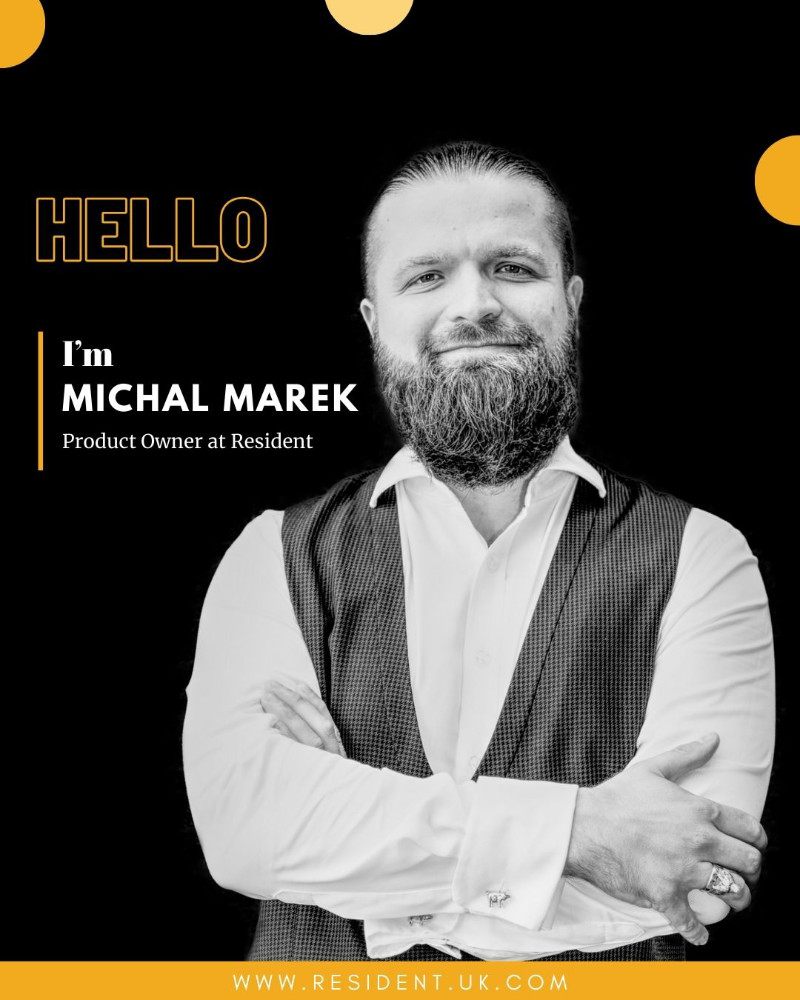
    So, now we know a bit more about you – tell us, what exactly does a Product Owner do?

    In short: whatever is needed 🙂 To elaborate, my main responsibility is to be a modern day translator, converting feedback from business to dev team. After that is done there is ‘only’ keeping eye on delivery, tests and more feedback.

    During your career what have been the most valuable lessons you’ve learned along the way?

    I have learned a lot of technical and soft skills but the most impactful was something I call business empathy. It is a skill of putting myself in the shoes of my client or colleague to better understand their needs. It allows you to work more efficiently and understand even the most difficult emotions.

    You must have seen many changes in your time at Resident – which stands out the most to you and why?

    There were so many of them and some of the most impactful things were done behind the scenes. I will just give two examples. The most impactful (and causing the majority of sleepless nights) was integration with bank feeds. My personal favourite is Mail Merge which I created from scratch.

    What excites you the most about Resident’s future?

    It would be a small confidentiality breach to give too many details but let’s say I am a big fan of all restoration shows.

    The ways in which people learn, purchase, research and interact have hugely changed since the pandemic. Do you think Clients’ wants and needs from a software perspective have had to shift because of this too?

    It feels like we were one step ahead of those strange times so this major shift to remote work made clear the importance of solutions we are offering for transparency in property management businesses.

    You told us earlier what a Product Owner does, but what one thing would surprise people to know is a big part of your working life?

    I am not sure there is such a thing as my job is really making sure the job is getting done correctly. Right on time every time.

    Oh maybe meme exchanges before our daily calls. Although I am quite sure that is not in my job description…

    So, penultimate question now – what is it like to work at Resident? Give us the scoop…

    Just expect the unexpected. Keep calm and eat elephants, The best way to do it is bit by bit. Oh, you need to remember nothing is personal.

    For anyone who might be considering a future as a Product Owner, what advice would you give?

    Be open minded to new skills and knowledge. Although curiosity killed the cat you will surely fail in the job without it.